Kumelhan — an Evil Spirit
- Main
- >
- Slavic Mythology
- >
- Slavic Bestiary
- >
- Kumelhan
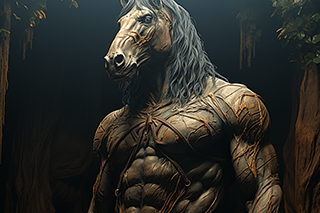 Kumelhan
Kumelhan is an evil spirit in Slavic mythology, most often found in Belarusian folklore. He is described as a tiny creature no bigger than a hand, with a human torso and a horse's head, hooves in place of hands and feet, and a body entirely covered in fur — able to move both on all fours and upright on his hind legs. This spirit is interested in nothing but horses, whom he loves to torment, choke, and wound, mixing poisonous herbs into their feed, and feeding on them by drinking their strength.
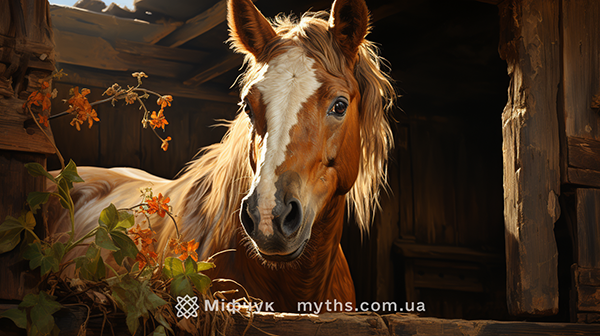 Kumelhan torments horses
This spirit is active at night in stables and pastures. Kumelhan is afraid of horses because of his small size, so he isolates his victims using a magic bridle. He throws it over a horse, leads it away from the herd, and only then torments it. The bridle can also lull horses to sleep so they cannot resist. It's worth noting that Kumelhan can only pull off this trick when his chief enemies — according to some tales, his brothers — Tabunnyk and Koniushnyk are absent (in other sources, the two are merged into a single being called Vozylo). These two spirits are the guardians of horses, watching over and nourishing them, and driving Kumelhan away.
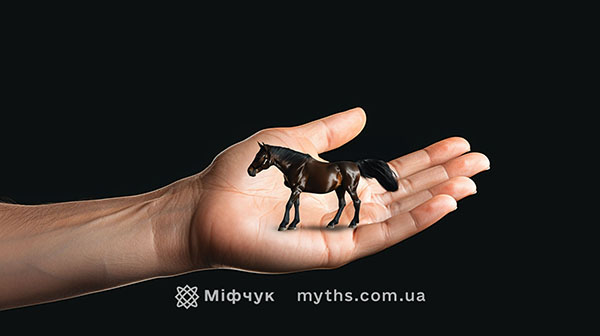 Kumelhan is very small
According to legend, this mischievous spirit lives in mouse burrows outside the farm. It's not easy for him to sneak into the yard, since skilled farmers know how to protect against Kumelhan — hanging up blessed herbs, scattering salt, or placing sharp objects near the stable or pen. But the spirit is cunning, and uses his ability to transform into a horse to deceive the farmers. He'll turn into the farmer's own steed and stand outside the gate, waiting for the owner to spot him and lead him into the stable. Then the illusion fades, but the spirit remains invisible to human eyes.
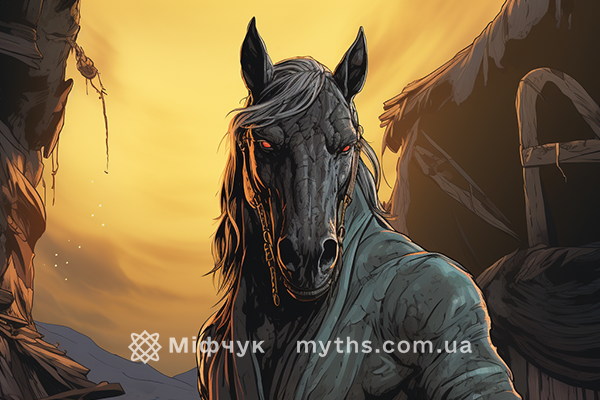 Kumelhan drains the horses' strength
Most researchers believe Kumelhan belongs exclusively to Belarusian mythology, though he is said to have been mentioned in Polissia as well. Folk sayings include: "the dog serves like a Kumelhan," meaning a dog standing on its hind legs; "may Kumelhan ride you, not good people," a curse aimed at disobedient horses; and "Kumelhan has taken a liking to this place," said when horses began falling ill and dying.
Related Articles