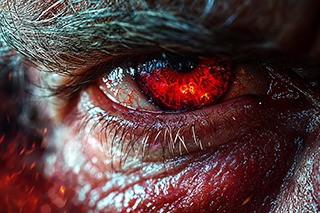
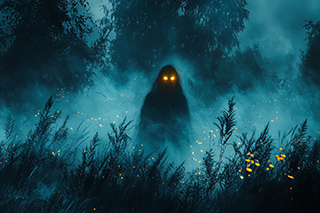
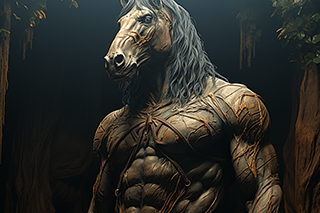
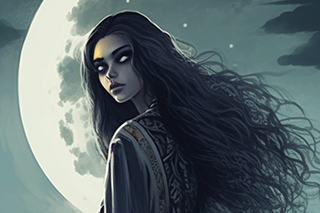
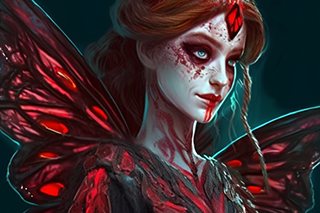
Viy is a demonic being from Slavic mythology, described as a lord of dark powers who can kill with a single glance. His roots lie in the pre-Christian beliefs of the Eastern Slavs...
Read more
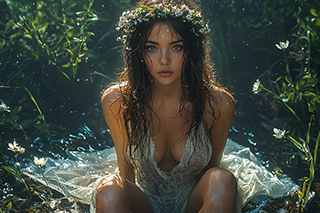
The rusalka is one of the most iconic mythological creatures in Slavic folklore. She was believed to be the spirit of a girl who had died an unnatural death....
Read more
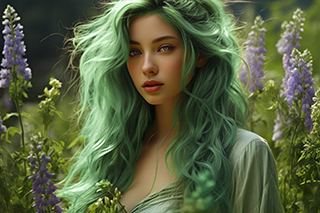
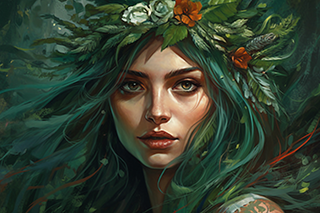
Kanupernytsia is a forest mavka connected to plants with healing properties. This forest maiden lives among thickets and forest clearings....
Read more
Will-o'-the-wisps, or blukayuchi vohni, are spirits of the restless dead and sinners in Slavic mythology. These lights can be seen at night in marshes, cemeteries, roads, and meadows, where they flicker and lure travelers....
Read more
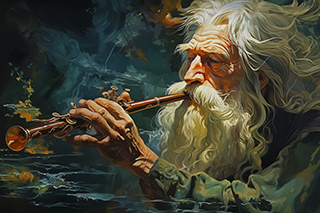
Dudari, or the Frogs, are creatures of Ukrainian mythology. They mean no harm to anyone and live in bodies of water, playing the pipe in the evenings....
Read more
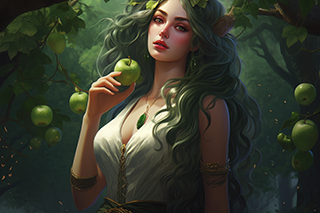
Yablunytsia is a kind forest mavka who lives in an apple tree. She wears a wreath of apple blossoms....
Read more
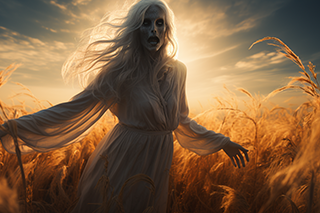
Poludnitsa is an evil spirit in Slavic mythology, active at noon and dwelling in the fields, usually in summer....
Read more
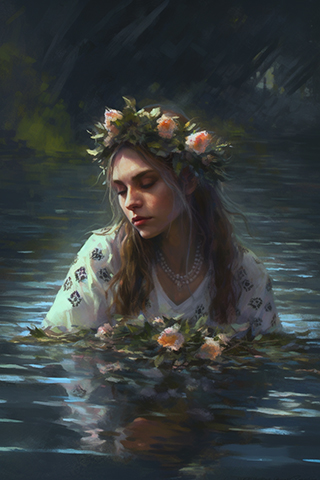
A Mavka is the spirit or soul of a girl who died prematurely, most often by unnatural causes. She belongs to the lower spirits in Slavic demonology...
Read more
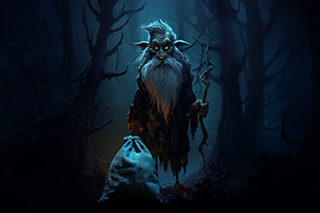
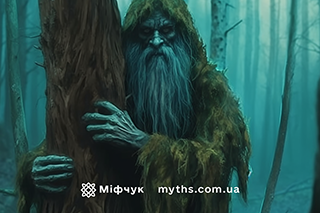
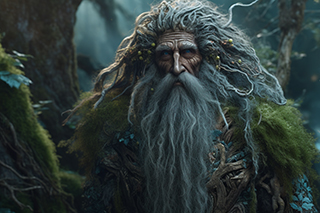
Babay is a night spirit in Slavic mythology who abducts disobedient children. He is depicted as an old man with a long beard and hair, often limping or with other disfigurements....
Read more
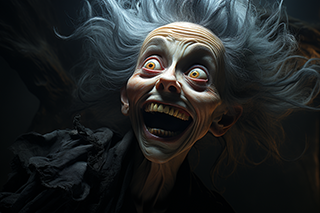
Naviya, or Neveya, is a malevolent being of Slavic mythology, the eldest daughter of Mara. She is described as a hideous old woman with eyes rolled back into her forehead, cackling wildly....
Read more
Povitrulya is a spirit from Slavic mythology. She is also called the daughter of the Carpathian winds....
Read more
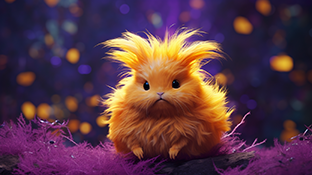
Khukhy are kind forest spirits in Slavic mythology. These creatures resembled small fluffy animals that could change color depending on their environment....
Read more
Kumelhan is an evil spirit in Slavic mythology, most often found in Belarusian folklore. He is described as a tiny creature no bigger than a hand....
Read more
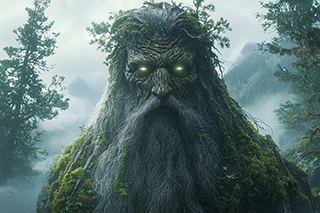
The Leshy is a forest spirit in the beliefs of Slavic peoples. He has no human parents, as he belongs to the ancient spirits of nature...
Read more
Blud is a spirit in Slavic mythology who leads travelers off their path, confuses them, traps them somewhere they cannot escape, or exhausts them terribly....
Read more
Nichnytsi are night demons among the Slavs. They can take the form of birds, bats, worms, or long-haired women dressed in black. They creep into homes at night and keep children from sleeping....
Read more
Veshtytsia is a she-demon in South Slavic mythology. She appeared as an old woman, hunched, shaggy-haired, gray, with a mustache, unibrow, a long nose, and hairy legs....
Read more
Chuhaister is a creature from Slavic mythology, most often found in the folk tales of Ukraine's Hutsul region. He is depicted as tall, elderly, with long gray hair and a beard....
Read more
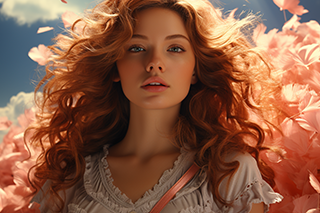
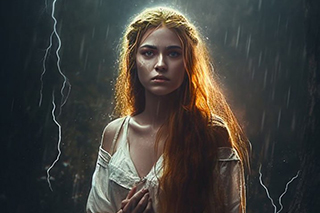
Hrozovytsia is a seductive forest mavka who appears during thunderstorms. She has beautiful red hair and black eyes....
Read more
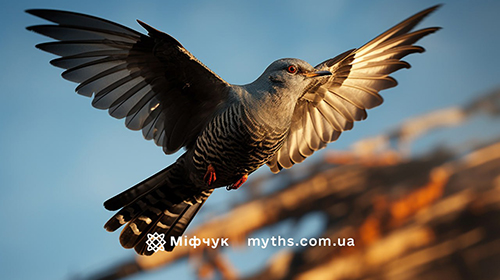
The cuckoo is one of the oldest figures in Ukrainian mythology. She was considered the keykeeper of Vyriy....
Read more
 Slavic Bestiary of Creatures and Monsters
 If there's one thing that truly enriches Slavic mythology, it’s its bestiary. Countless fascinating creatures, spirits, and mythical beasts have come down to us with remarkably detailed descriptions, confirmed by multiple sources. This isn’t because many written records survived, but thanks to generations of people who carefully passed this knowledge down orally. For some, these weren’t mere tales or superstitions — they were real beings, feared and revered. In fact, some people still believe in them today. Perhaps not without reason?
These creatures could inhabit almost any place — forests and fields, caves and crossroads, rivers and clouds. And don’t get us started on how many spirits were said to dwell in human dwellings — it’s hard to count them all. How many can you name? Just the domovyk? Oh no — there are far, far more!
Importantly, not all of these beings were evil or hostile. Many lived in harmony with humans and even helped them in their daily lives — protecting homes, assisting people, or guarding them from malevolent spirits. Almost all had well-defined personalities, vivid appearances, and clear motivations. Without that, they wouldn’t feel as alive and real as they do. This is exactly what etched them into memory, unlike other parts of Slavic mythology that can’t boast the same vividness.