Mara — the Slavic Goddess of Evil, Night, Horror, and Disease
- Main
- >
- Slavic Mythology
- >
- Slavic Pantheons of the Gods
- >
- Mara
 Mara
MaraMara is the Slavic goddess of evil, night, horror, and disease. She was also considered the ruler of the Underworld, mistress of death and all unclean forces. According to one version, she is both the daughter and wife of Chornobog, and bore the Serpent thirteen daughters — personifications of disease — who wander the world sowing sickness and death.
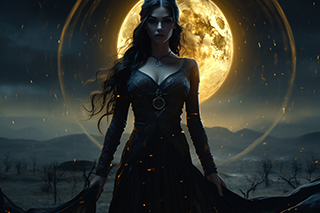
Mara was described in many different ways — sometimes dressed entirely in black, other times in pure white. She could appear as an old woman or as a beautiful young one. In most accounts, in fact, she is described as a beauty with long black braids. Her symbols were considered to be a skull, the black moon, and a sickle, with which she cut the Threads of Life.
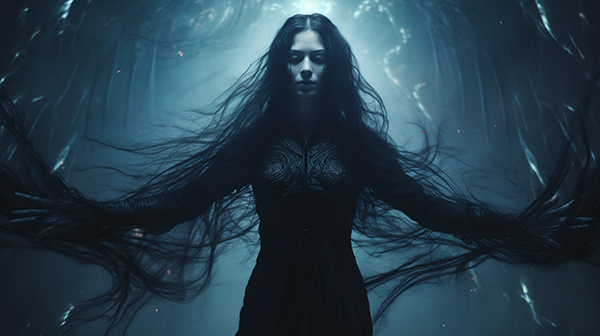 Mara, the Slavic goddess of evil, night, horror, and disease
Mara walked among the living, spreading disease, discord, enmity, and lies. She would appear at night and move between people's homes, calling out the names of the residents — and if the person named answered, death would soon await them.
Some accounts claim that her domain, the Underworld, lies beyond the Smorodyna River, which separates the world of the living from the world of the dead. The Kalynov Bridge crosses this river, guarded by a Three-Headed Serpent. One ancient symbol — two wavy lines — also represented water, and alongside Mara, this embodied "dead water." On one hand, water represents life; on the other, dead water cannot grant that life, though according to myth, it can heal wounds. This is why Mara's image is not nearly as clear-cut as it might first appear.
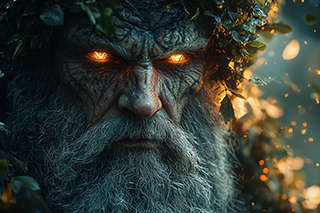
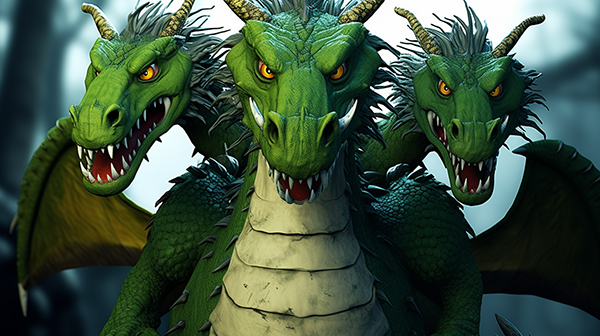 The Three-Headed Serpent
In the beliefs of our ancestors, Mara was not entirely evil. Everything she does is simply her duty and her role — for according to our forebears, death was only a temporary passage to another world, after which rebirth and new life would follow. This idea likely stems from observing the changing seasons: spring, when new life begins; summer, blossoming and growth; autumn, harvest and maturity; and winter, old age and death. And the most fascinating part is that spring always returns again. The cycle repeats, and will go on repeating forever.
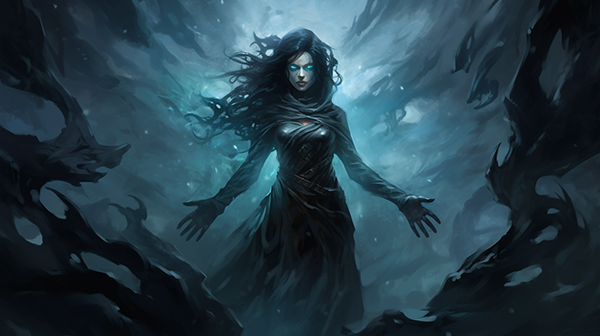 Everything Mara does is her duty
Mara is considered the mother of countless evil spirits, ailments, and unclean beings. In particular, she personally bore the Serpent thirteen personifications of disease: Naviya, Vohnevytsia, Hlukhania, Korkusha, Lyaklyvytsia, Lin, Lidnytsia, Lomota, Zhovtianytsia, Hryzachka, Ochnytsia, Tryasovytsia, and Cherevukha. Each name symbolizes the particular illness that spirit specializes in.
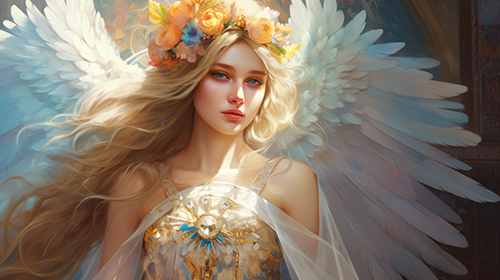
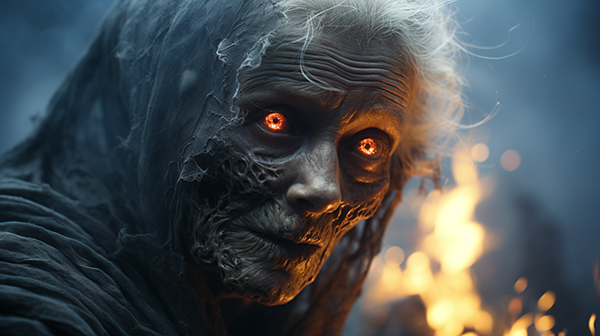 Mara's daughter Vohnevytsia
Mara is closely tied to the changing of the seasons. First, every year she attempts to catch up with the pregnant Kolyada and prevent her from giving birth to Bozhych, the newborn Sun. But through cunning and shapeshifting, Kolyada always manages to escape. Second, Mara was associated with the dying of nature and with the harshest season of the year — winter. This is when she is at her strongest and holds power over all others. January 13th was considered the Day of Mara, or Mara Zymova (Mara of Winter), since she was at the peak of her power. This day was not celebrated — quite the opposite, people behaved with great caution to avoid bringing misfortune upon themselves. It was also believed that all her daughters were at their strongest on this day and could roam the streets freely. There is a tradition of leaving milk, bread, and sweets on the doorstep on this day — not for Mara and her daughters, but for the domovyk (house spirit), so that he would protect the home and its residents from them.
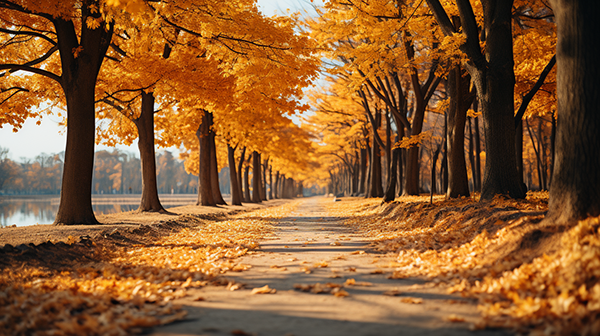 Mara is tied to the changing seasons
On March 1st, special attention was given to Mara as a symbol of winter — during this time, she was called Mara Vesniana (Mara of Spring). In their spring rituals, people bid farewell to the cold and welcomed the new season. They made an effigy of Mara, carried it through the streets, sang and danced, and at the end, either burned it or drowned it.
A similar ritual was performed during the festival of Kupala, on the day of the summer solstice. An effigy or a tree was decorated with beads, ribbons, and wreaths, and a bonfire was lit. During the celebration, young men and women would leap over the fire, dance, and sing. Afterward, the young men would steal the effigy, and depending on the region, deal with it differently — some burned it, while others drowned it in the nearest body of water.
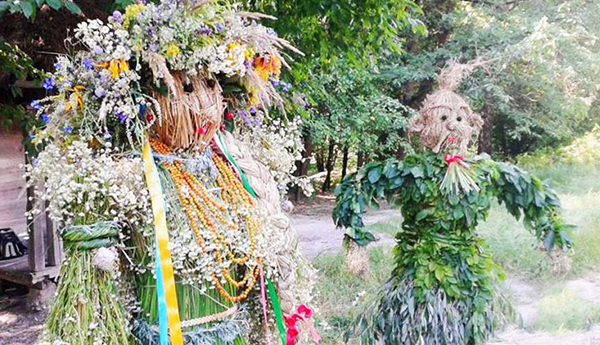 The festival of Kupala
It's worth noting that most consider Mara, Morena, Morana, and Marena to be one and the same figure, though some researchers treat Morena as a separate deity — a rusalka and ruler of the water realm. She is the one regarded as Kupalo's wife and as the effigy used in festival rituals. Morena arrives in spring and takes Mara's place. Perhaps this image simply represents one of the goddess's many transformations.
December 21st was considered Mara's final day of the year, when she was called Mara Osinnia (Mara of Autumn). This day marks the onset of cold, frost, snow cover, and blizzards. Mara gathers her strength and becomes the world's full ruler. On this day, people honored her and asked for her mercy — for a mild winter, protection of their livestock and winter stores, and that she spare their lives.
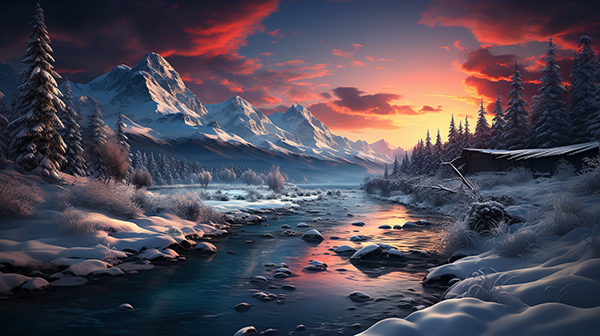 The onset of cold and frost
It was believed that on this day, the boundary between the world of the living and the world of the dead grew thinnest. Unclean spirits gained their greatest power to interact with and influence the human world. Of course, not all these creatures were evil or hostile — many were neutral or even benevolent. So people sought both to appease them and to protect themselves at the same time, crafting various charms against evil spirits while trying to establish contact with the good ones.
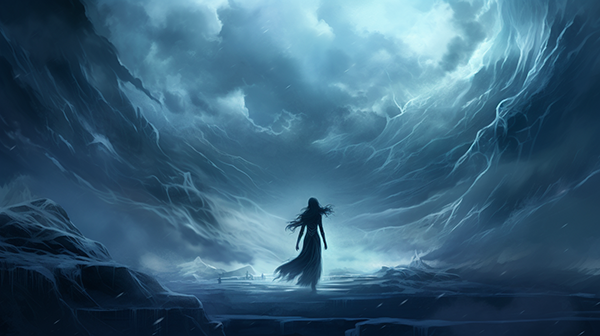 Mara Zymova (Mara of Winter)
Besides the world of the dead, one had to remember the world of the living too. In these final days, people finished their preparations for winter — gathering supplies and everything else that might help them survive the season. Naturally, all of this had to be done in advance, and Mara Osinnia seemed to signal that it was now too late to keep preparing, as the fiercest of her forms — Mara Zymova — was about to take over once more. The cycle of life and death draws to its close, so that everything can begin again the following year.
Related Articles