Griffin — a Creature from Greek Mythology
- Main
- >
- Greek Mythology
- >
- Greek Bestiary
- >
- Griffin
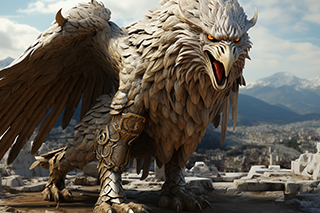 Griffin
The griffin is a creature from Greek mythology with the body of a lion, the wings and head of an eagle, and a serpent's tail, symbolizing dominion over two elements — the sky (eagle) and the earth (lion). The serpent's tail may hint at ties to the underworld as well, though not all sources attribute this feature to the creature.
The griffin embodies strength, speed, vigilance, and courage, and in legend it plays the role of a guardian watching over treasures or hidden knowledge. The image of this creature originates in the ancient East. The earliest references to it were found in ancient India, and it has also been attributed to Babylon, Egypt, and Scythia. The Greeks themselves even pointed to its dwelling place, which they believed lay in the mountains of ancient Scythia, north of the Black Sea. There, griffins guarded the gold of the Scythians and often appeared in the imagery on their jewelry.
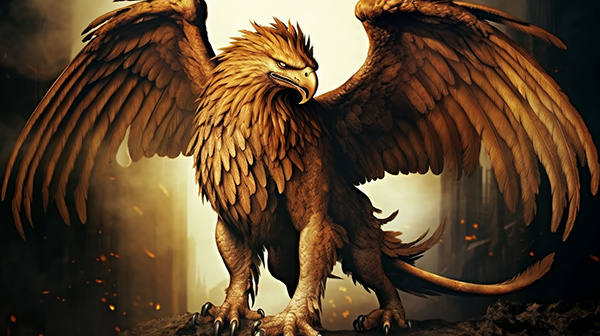 The griffin embodies strength, speed, vigilance, and courage
The griffin is considered a union of the two most important solar animals. This was especially significant to the Egyptians: the lion in this creature symbolized for them a king and ruler, while the eagle represented Horus, the god of the sky. During the Middle Kingdom, griffins were depicted on chariots to inspire warriors toward victory and strike fear into their enemies. In the Roman era, the gods Horus and Ra were depicted in the form of this creature.
In Greece, it was said that Apollo rode griffins. They were also harnessed to the chariot of Nemesis, the goddess of retribution, symbolizing the inevitable and swift punishment for sin — and her embodiment in the form of griffins turned the Wheel of Fate.
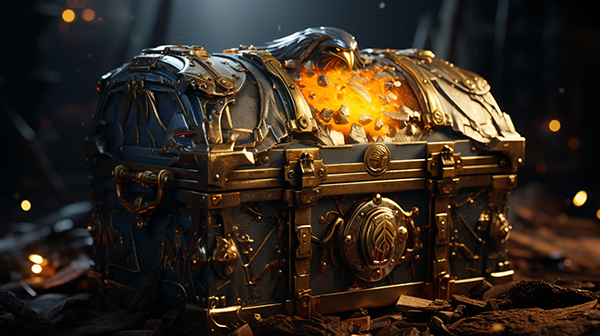 The griffin guards treasure
Griffins closely resemble, in their imagery, their more powerful kin — dragons. They too are described as guardians of treasure, especially gold and precious stones. Some accounts even attribute to them nests built of gold. Herodotus mentioned griffins in the 5th century BCE, claiming that they guarded the gold mines of the Scythians from a mythical tribe of one-eyed people called the Arimaspians.
The character and image of griffins vary drastically depending on where they are mentioned: in some accounts they are fierce, merciless, bloodthirsty monsters bringing death and destruction; in others, noble companions of humans and gods, serving as protectors and guardians. Even within the same region, people's views of them shifted over time under the influence of different religions or conflicting works, where an author's personal invention became reality for their audience.
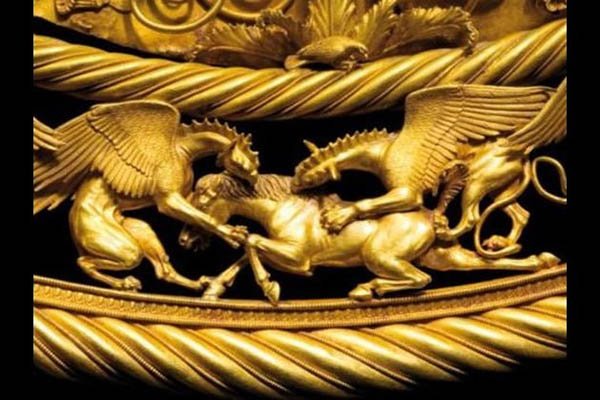 Depictions of griffins in works of art
Depictions of griffins appear in artworks from prehistoric Crete, dating to the 17th–16th centuries BCE, as well as in Sparta (8th–7th centuries BCE). Many surviving Scythian gold ornaments bear images of griffins. In these, griffins are most often shown fighting other animals or hunting, with horses or cattle as their prey.
In the Middle Ages, the griffin became the most beloved heraldic creature. It symbolized vigilance and courage, while also radiating intelligence, strength, and speed, and it appeared on dozens, if not hundreds, of different coats of arms. And to this day, it remains widely used on them.
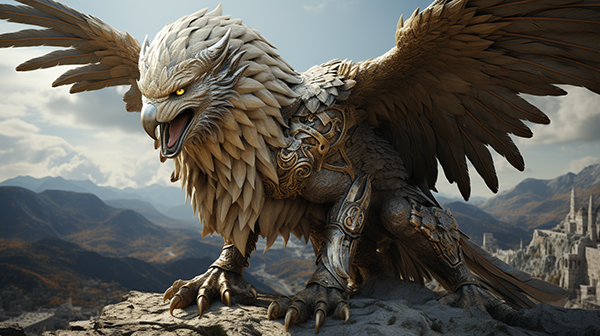 Griffins are popular in video games
Today, this mythical creature is extremely popular in video games, and it's hard to surprise anyone with it. Griffins still radiate the power and strength they have symbolized for thousands of years. They also express humanity's eternal yearning to rise into the clouds and stand, in this way, alongside the gods.
Related Articles