Samhain (Samain, or Halloween)
- Main
- >
- Celtic Mythology
- >
- Celtic Rituals, Festivals, Traditions and More
- >
- Samhain (Samain, or Halloween)
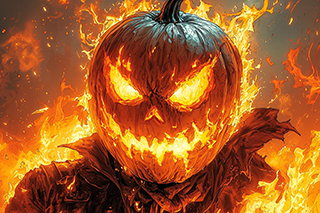 Samhain
Samhain (Samain) is a Celtic festival marking the end of the agricultural year. It was considered the close of the annual cycle and the beginning of a new one. Before it, all preparations for winter had to be completed. Herds returned from their summer pastures, people finished laying in their stores, and decisions were made about which livestock to keep for the following year and which to slaughter for meat.
The festival was celebrated over seven days. The first three days fell in the last days of October, with the main celebration taking place on the night of October 31st into November 1st. Then three more days were observed in early November. The Celts even called this month Mí na Samhna (mee na sow-na), or "the month of Samhain."
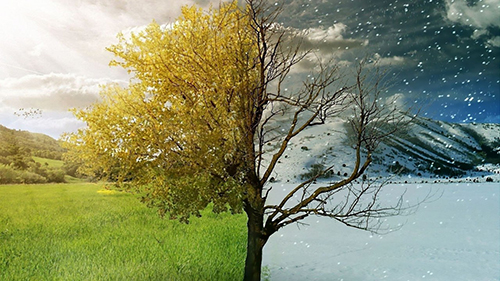 The Celtic division of the year
The Celts divided the year into two halves: a bright half from April to October, and a dark half from November to March. The transition occurred at Samhain, marking the start of the new year. After the adoption of Christianity, the festival was renamed All Saints' Day, and it is also observed today as Halloween.
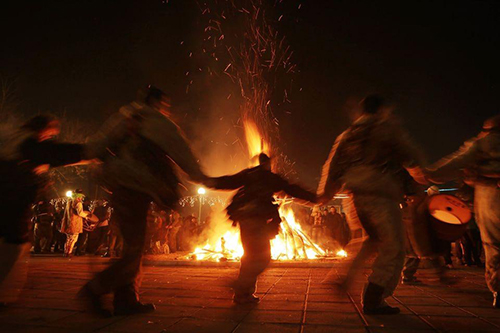 Celebrating Samhain
The Celts believed that not everyone was destined to pass from the old year into the new, and that it was on this very day that those who had broken their geasa (individual taboos) would die. During the celebration, bonfires were lit and animals were sacrificed; the druids would cast bones into the flames and read the future from what remained. People also purified themselves through fire by leaping over bonfires or walking between two of them at once.
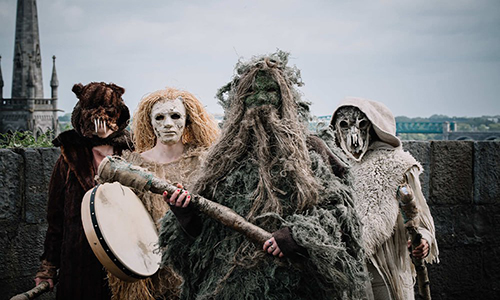 Dressing as animals
During Samhain, a new flame from the sacred hearth was carried into every home. This hearth fire was kindled by the druids through friction against wood, which preserved the fire's purity and demonstrated its newness. Old fires were extinguished, likely as a way of driving out evil spirits. This ritual closely resembles the kindling of fire during Christmas, and it may well be that this Christmas tradition descends from this very Celtic custom.
According to myth, during the celebration the boundary between the world of the living and the dead grew thin. Evil spirits were set loose and walked among people. To protect themselves and pass as one of the spirits, people dressed in animal hides, and set protective charms shaped like lanterns carved from vegetables outside their homes. Most often, this vegetable was a pumpkin.
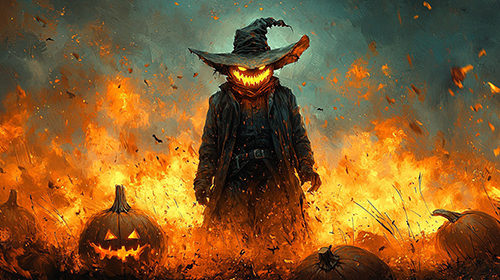 Halloween
Unfortunately, this festival has changed a great deal by today. Some customs have been lost and forgotten entirely. After the 12th century, Ireland was conquered by the Anglo-Saxons, who forbade its celebration. Later, under the influence of Christianity, it transformed into All Saints' Day, and it is in that form that it continues to this day.
In Ukraine, Samhain is celebrated by enthusiasts of Celtic culture, though it more closely resembles All Saints' Day than the original festival. Young people and lovers of spooky yet festive holidays celebrate it under the name Halloween. This version has spread to many countries around the world and remains highly popular today. Most people don't even realize what a grand and ancient festival stands as its ancestor…
Related Articles