Legends of Bilhorod-Dnistrovskyi Fortress (Akkerman Fortress)
- Main
- >
- Slavic Mythology
- >
- Slavic Myths, Legends, and Folktales
- >
- Legends of Akkerman Fortress
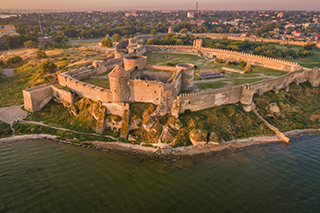 Bilhorod-Dnistrovskyi Fortress
Bilhorod-Dnistrovskyi Fortress (known as Akkerman Fortress until 1944) was built on the site of the ancient city of Tyras between the 13th and 15th centuries. It is the largest surviving fortress in both Ukraine and Eastern Europe, covering an area of 9 hectares. Countless incredible legends are tied to this fortress and the land around it. Some date back to the age of the pharaohs, others tell of events much closer to our own time, and some are said to be unfolding right now!
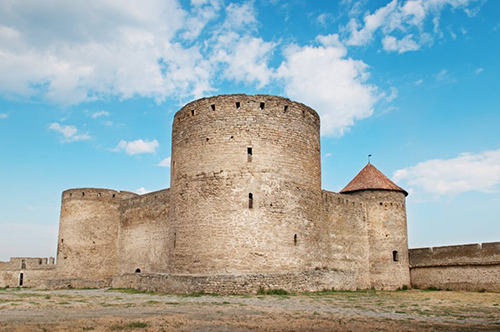 Known as Akkerman Fortress until 1944
One such legend claims that the famous classical poet Ovid was exiled to the ancient city of Tyras, where he soon died and was buried. It is thought that this is why the town on the opposite shore of the Dniester Liman was named Ovidiopol. It is also said that famous people once traveled to the fortress in search of Ovid's grave. However, this legend was disproven when his actual burial site was found near the city of Tomis (present-day Constanța, Romania), where he had in fact been exiled by the Roman emperor Augustus.
The Island of the Tyragetae
This legend tells of a flourishing island where the Dniester Liman now lies, home to the Tyragetae tribe. But the warlike Romans decided to conquer the island and seize the mysterious treasures held by its native people. At night, they landed on the island's shore and attacked the settlement. The Tyragetae defended themselves fiercely, but the attackers were far stronger. So the local priests turned for help to Tyras, the river god they worshipped. Suddenly, clouds covered the sky, thunder roared, lightning flashed, and a terrible downpour began. A hidden underground passage opened before the Tyragetae, and they descended into it, whereupon it sealed shut behind them. The rain was so heavy that it swept the Romans away and drowned them. In the end, the entire island sank beneath the water.
 The Island of the Tyragetae
The legend claims that one day the underground passage will open again, and the island will rise from the depths of the liman. The Tyragetae will return to the surface and once more live and flourish.
The Mysterious Horned Underground People
Beneath Bilhorod-Dnistrovskyi Fortress lies a sprawling network of underground tunnels and passages. They have been shrouded in mystery since the time of the Greek colony of Tyras, and remain almost entirely unexplored to this day. Among the local population, countless stories circulate about mysterious, horned, humanlike creatures said to live in these tunnels.
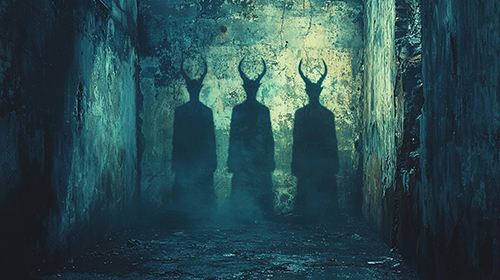 The mysterious horned underground people
Fishermen have told of seeing human figures with horns jutting from their heads near the fortress wall in the evening. Other locals have claimed that overnight, mysterious creatures stripped their pear and apple trees completely bare. They are also said to have stolen and drunk an entire tank of milk, later dumping the empty tank in the liman. But one time, the locals were genuinely terrified. Loud, strange sounds — like banging and explosions — came from underground all night long. This continued for several hours before everything went quiet, and the horned creatures left the townspeople in peace for many years. Eventually, the mysterious incidents began happening again. Perhaps the underground people had found new ways to reach the surface.
The Treasure of the Egyptian Priests
One theory holds that the underground tunnels — and even an entire city beneath Akkerman Fortress — were built by Egyptian priests in the 14th century BCE. Fearing for their lives, they fled Egypt together with their families to the "edge of the world" during the religious upheaval that took place under the reign of Akhenaten (Amenhotep IV), whose wife, incidentally, was the famous Nefertiti.
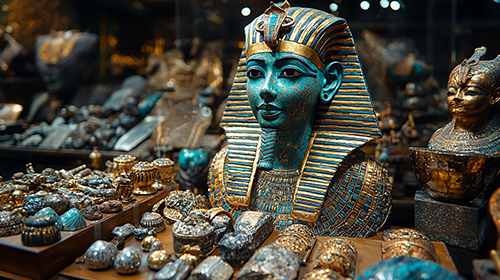 The treasure of the Egyptian priests
The priests and their families arrived at the ancient city of Tyragetae, which they considered the "edge of the world." But they did not flee empty-handed — they brought with them priceless artifacts and treasures, including ritual objects, gold jewelry, and enormous diamonds. They hid these treasures in their underground tunnels, blended in with the local population, and founded a secret order. For several thousand years now, they have secretly guarded their treasures from everyone, dealing ruthlessly with anyone who discovers their tunnels or happens to learn of their existence.
Cannonballs on the Wall
Ten cannonballs are set into one of the fortress walls, arranged to form nine equal, regular triangles. This figure is known as the tetractys and is considered magical. The Druids used the tetractys in their rituals, and the shape later became one of the symbols of Freemasonry. This has led some historians to believe that Bilhorod-Dnistrovskyi Fortress was built by Freemasons. Further support for this theory comes from a plaque discovered in one of the towers, reading: "Master Fedorko completed construction in 1440." At the time, "Master" was a title used for the head of a Masonic lodge.
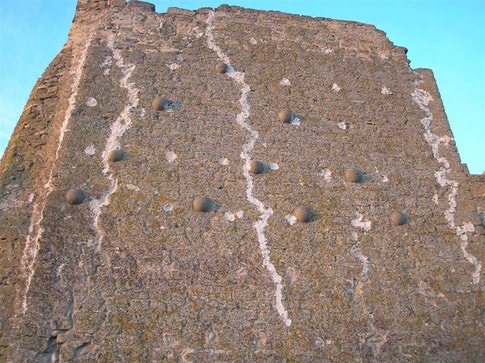 Cannonballs on the wall
Other researchers and historians argue that this is simply a kind of sundial, with no connection to the Freemasons whatsoever. But who really knows where the truth lies? Perhaps this legend is connected to the others? Or perhaps they're all pieces of the same puzzle...
 Bilhorod-Dnistrovskyi Fortress
Bilhorod-Dnistrovskyi Fortress, or Akkerman Fortress, has a long and fascinating history. It is overgrown with legends and mysteries that will always stir the imagination and drive people to learn more — to seek answers to the secrets hidden behind its walls, and beneath the very ground on which it was built.
Related Articles