Search on the website

Greek Myths, Legends, and Tales
Pandora’s Box
Read more...
Pandora’s Box
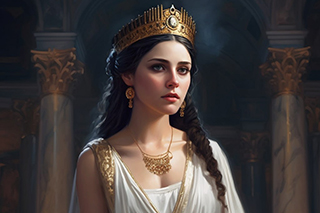
Pandora — the first woman in Greek mythology, created by Zeus’s command. Her name means “All-gifted.” She became famous for opening the jar...
Read more
The Youth of Heracles
Read more...
The Youth of Heracles
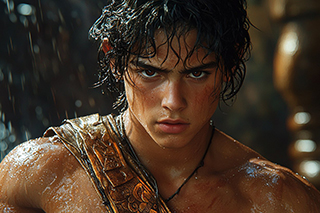
Hera never gave up her attempts to destroy Alcides, the future Heracles, even in the very first days of his life. When he and his brother lay in their cradle, she sent two serpents against him....
Read more
The Birth of Heracles
Read more...
The Birth of Heracles
It all began with the celebrated hero Perseus and his descendants. His son, Electryon, ruled in Mycenae, but the Taphian tribe stole....
Read more
Hera
Read more...
Hera
Every spring, Hera renewed her virginity and youth by bathing in the sacred spring of Kanathos near Argos....
Read more
The Apple of Discord
Read more...
The Apple of Discord
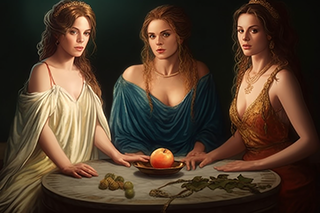
The Apple of Discord is the apple of Eris, goddess of strife, which set off the Trojan War....
Read more
The Lernaean Hydra
Read more...
The Lernaean Hydra
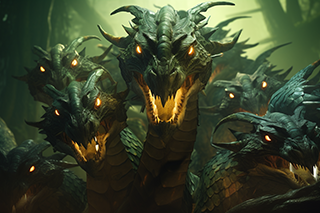
After his victory over the Nemean Lion, Eurystheus immediately gave Heracles his next task — to defeat the Lernaean Hydra. The Hydra, too, turned out to be an offspring of Typhon and Echidna....
Read more
The Cyclops and Galatea
Read more...
The Cyclops and Galatea
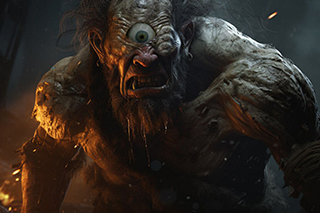
On the island now known as Sicily, near the volcano Etna, lived a Cyclops named Polyphemus, son of the god Poseidon and the nymph Thoosa. He lived in a great cave, herded sheep and goats, and loved their meat, milk, and cheese....
Read more
The Nemean Lion
Read more...
The Nemean Lion
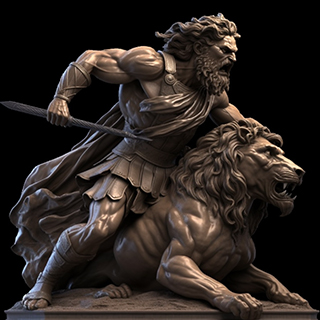
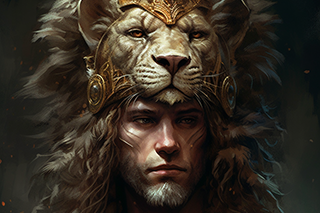
The Nemean Lion was a mythical lion of enormous size, offspring of Typhon and Echidna (other versions exist). It lived near the city of Nemea and hunted throughout the region....
Read more
The Magic Girdle of Aphrodite
Read more...
The Magic Girdle of Aphrodite
Aphrodite had a magic girdle. Whoever wore it became extraordinarily sexually alluring....
Read more
Greek Myths, Legends, and TalesGreek Myths, Legends, and Tales
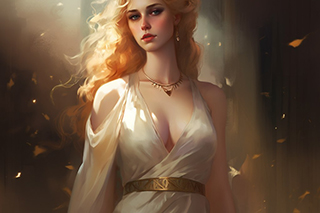
Let us travel to the southern reaches of Europe, to the enchanting shores of the Balkan Peninsula, and breathe in the fresh air of the Aegean Sea. Once upon a time, this land flourished as Hellas—ancient Greece—the cradle of culture for nearly all of Europe and beyond. The myths of the ancient Greeks, dating back to the 2nd–1st millennia BCE, are among the best preserved to this day.

According to the earliest recorded myths, the Greeks believed the world originated from Chaos. They perceived nature and the surrounding world as living and conscious entities. First came Gaia—Mother Earth—who gave birth to all that lives and thrives on the planet. Natural phenomena were personified as divine, sentient beings. But as humans learned to tame and understand the forces of nature, their mythology evolved. Anthropomorphic gods emerged and formed a complex, well-organized pantheon led by Zeus.

These gods dwelled on Mount Olympus and bore human form—except for their immortality. Their divine abode was a realm of perpetual fair weather, feasts, and enchanting music sung by the Muses. Sometimes, they descended to the mortal world, interacted with people, and even had children with them.

Greek myths and legends primarily aim to explore these relationships—between gods themselves, and between gods and mortals. And judging by their legacy, they succeeded brilliantly.