Sirens — Malevolent Demonic Creatures
- Main
- >
- Greek Mythology
- >
- Greek Bestiary
- >
- Sirens
 Sirens
Sirens are malevolent demonic creatures from Greek mythology. They were depicted as beautiful women with the lower half of a bird or fish (sea Sirens), and were considered daughters of the god Phorcys (in another version, Achelous) and the Muses. They were transformed into monsters by Demeter for failing to help Persephone when she was abducted by Hades. The Sirens lived on small islands, cliffs, or reefs, littered with the bones and dried skin of their victims.
The Sirens' singing was pleasant and enchanting, but extremely dangerous to sailors passing nearby. It entranced anyone who heard it, luring them into the demonesses' trap. Ships would run aground on the reefs and sink, after which these bloodthirsty creatures would catch the sailors, tear them apart, and devour them.
 Bloodthirsty Sirens
They are mentioned in numerous works of ancient Greek literature, where they are described somewhat differently each time. One myth tells of a singing contest between the Sirens and the Muses. The Muses won, and plucked out some of the Sirens' feathers as ornaments. From then on, the demonesses lost their ability to fly.
 The Sirens in the Odyssey
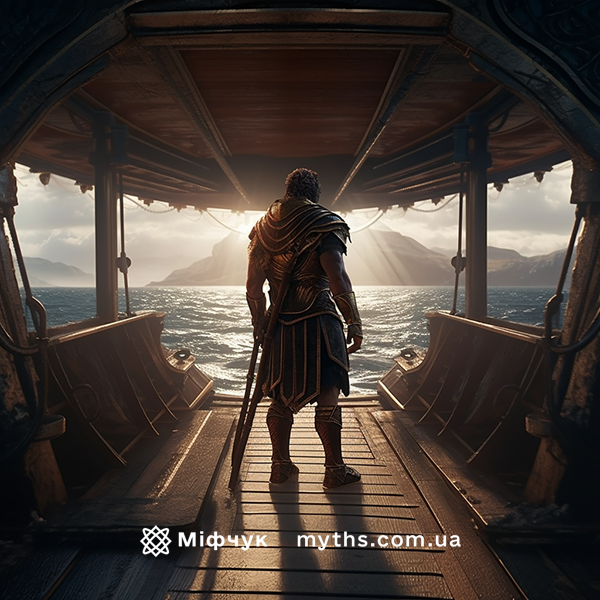
The "Odyssey" mentions that they lived on an island between Circe and Scylla, where they sat on the shore and lured sailors to a sweet, spell-bound, but certain death. Odysseus, however, was warned in advance and prepared for his encounter with the Sirens — he plugged his crew's ears with wax and had himself tied to the mast. In this way, they managed to sail past safely and continue their journey.
 The Sirens and their song
 The Sirens, prototype of mermaids
In the poem "Argonautica," during the Argonauts' voyage, their ship passed by the island of the Sirens. Orpheus managed to drown out the enchanting and alluring voices of the beauties with his lyre and his own loud singing. But one member of the crew, Butes, still leapt into the sea — though he was fortunate enough to be rescued by Aphrodite.
There are also numerous accounts of a curse upon the Sirens. If someone who heard their song resisted temptation and sailed past unharmed, the Sirens themselves would perish. And so, when Odysseus succeeded, the Sirens threw themselves into the sea and turned to stone.
For sailors, the Sirens embodied the many dangers that awaited them at sea. They symbolized, on one hand, the enchanting beauty of the sea's surface, and on the other, its treacherous and cruel nature — beneath which shoals, cliffs, or other unseen dangers could lurk.
Images of Sirens were often used in architecture and various works of art. Their sculptures and depictions were carved on tombstones and linked with the Harpies and the Keres. They became the prototype for the sea maidens found in countless works throughout Europe, and to this day they appear on screens and across countless forms of art in the shape of tailed mermaids.
Related Articles